Currency
 AED
AED
 AFN
AFN
 ALL
ALL
 AMD
AMD
 ANG
ANG
 AUD
AUD
 AWG
AWG
 AZN
AZN
 BAM
BAM
 BBD
BBD
 BDT
BDT
 BIF
BIF
 BND
BND
 BOB
BOB
 BSD
BSD
 BWP
BWP
 BZD
BZD
 CAD
CAD
 CDF
CDF
 CHF
CHF
 CRC
CRC
 CVE
CVE
 CZK
CZK
 DJF
DJF
 DKK
DKK
 DOP
DOP
 DZD
DZD
 EGP
EGP
 ETB
ETB
 EUR
EUR
 FJD
FJD
 FKP
FKP
 GBP
GBP
 GMD
GMD
 GNF
GNF
 GTQ
GTQ
 GYD
GYD
 HNL
HNL
 HUF
HUF
 IDR
IDR
 ILS
ILS
 INR
INR
 ISK
ISK
 JMD
JMD
 JPY
JPY
 KES
KES
 KGS
KGS
 KHR
KHR
 KMF
KMF
 KRW
KRW
 KYD
KYD
 KZT
KZT
 LAK
LAK
 LBP
LBP
 LKR
LKR
 MAD
MAD
 MDL
MDL
 MKD
MKD
 MMK
MMK
 MNT
MNT
 MUR
MUR
 MVR
MVR
 MWK
MWK
 MYR
MYR
 NGN
NGN
 NIO
NIO
 NPR
NPR
 NZD
NZD
 PEN
PEN
 PGK
PGK
 PHP
PHP
 PKR
PKR
 PLN
PLN
 PYG
PYG
 QAR
QAR
 RON
RON
 RSD
RSD
 RWF
RWF
 SAR
SAR
 SBD
SBD
 SEK
SEK
 SGD
SGD
 SHP
SHP
 SLL
SLL
 STD
STD
 THB
THB
 TJS
TJS
 TOP
TOP
 TTD
TTD
 TZS
TZS
 UAH
UAH
 UGX
UGX
 USD
USD
 UYU
UYU
 UZS
UZS
 VND
VND
 VUV
VUV
 WST
WST
 XAF
XAF
 XCD
XOF
XPF
XCD
XOF
XPF
 YER
YER



Description
xAbout the Painting
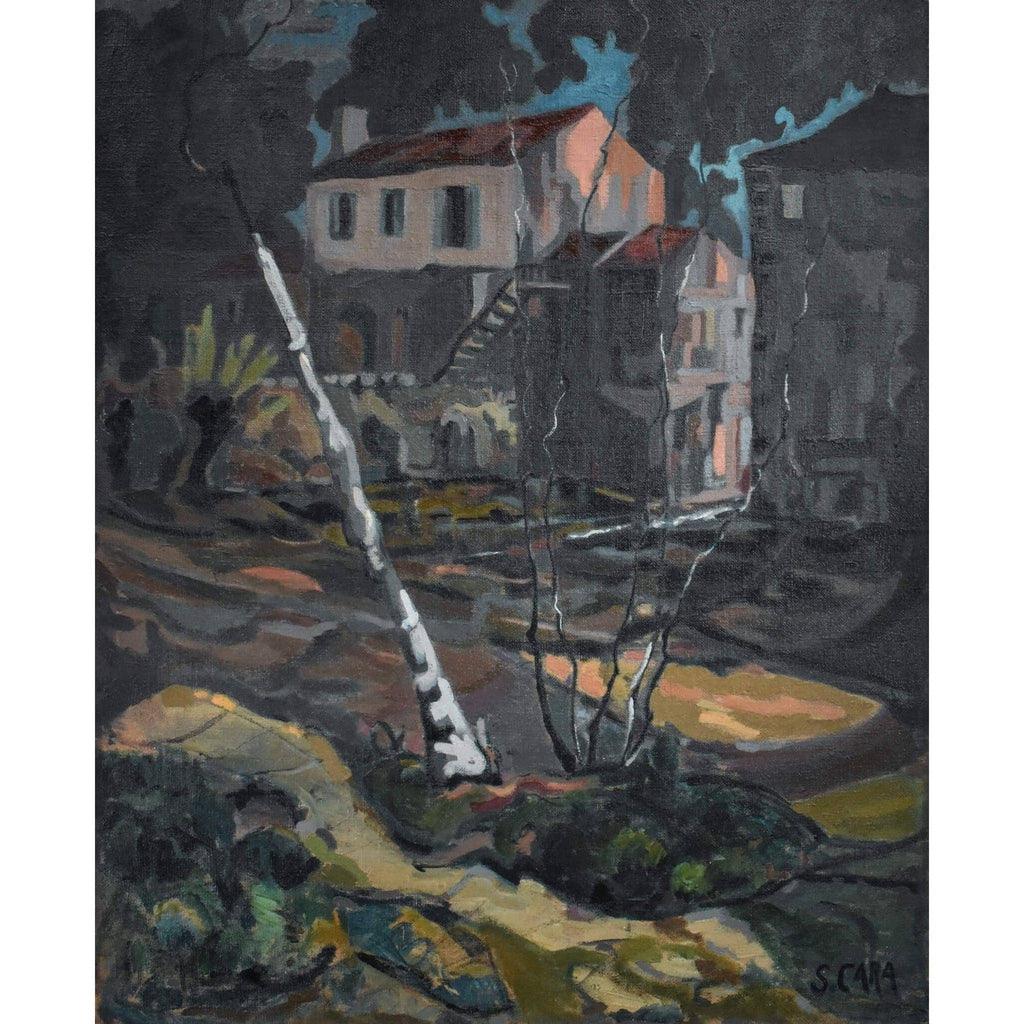
This large oil on canvas depicts a twilight view of a village with a stream in winter, capturing the quiet atmosphere of rural France through simplified forms and harmonious color planes. The composition demonstrates Cara's characteristic approach of reducing the motif to essential elements, achieving a synthesis where drawing and color work in perfect balance. The winter scene, rendered in muted tones with careful attention to light, exemplifies his post-impressionist sensibility and personal vision.
Cara's work resists easy categorization. Working in solitude for many years, he developed a distinctive style free from foreign influence, where each subject called for its own means of expression. This diversity and constant renewal became hallmarks of his artistic practice, as he simplified motifs into perfectly ordered indications of colored planes.
About the Artist
Stéphane Gilbert Fernand Caracotchian, known as Stéphane Cara (1901-1962), was a French post-impressionist painter. Born in Châtenois, Alsace, on July 3, 1901, to an Armenian father and French mother, he was the son of a prestigious doctor. His family moved to Paris in 1919, where Cara worked for many years as a wine merchant and agent for the Société Anonyme fluviale Trans-Cam in Bordeaux before dedicating himself fully to painting.
Initially self-taught with personal research free from outside influence, Cara later trained with Armand Drouant (1898-1978) and André Lhote (1885-1962) in Paris. His artistic career gained recognition through numerous exhibitions and awards. In 1944, he was selected at the Salon des provinces françaises in Bordeaux and became finalist for Guyenne at the Musée Galliéra, Paris. He won the Second Liburnia Prize in 1944 and the First Liburnia Prize in 1945.
From 1946, Cara exhibited at the Salon des Indépendants bordelais, and from 1957 showed annually at the Salon de l'Art Libre in Paris. In 1959, he won the Second Cézanne Prize at the "Trois prix Cézanne" competition in Cannes, followed by the Deauville International Grand Prix in 1960. That same year, he executed stained glass windows for the altar of the Virgin at Église Sainte-Hélène in Nice.
Cara authored "Painting in a Nutshell: or How to Judge a Painting" (1959). After traveling extensively, he settled in Nice in 1955, where he died on May 16, 1962, at age 60. His sister Anita was the world's first woman oceanographer.
Technical Details
Artist: Stéphane Cara (1901-1962)
Signed: Lower right corner
Medium: Oil on canvas
Condition: Very good condition
Dimensions: 92 x 74 cm / 36¼ x 29 in
Frame: Unframed
Origin: France
A contemplative winter landscape by this accomplished French post-impressionist. References: Archives de France.


- Choosing a selection results in a full page refresh.