Currency
 AED
AED
 AFN
AFN
 ALL
ALL
 AMD
AMD
 ANG
ANG
 AUD
AUD
 AWG
AWG
 AZN
AZN
 BAM
BAM
 BBD
BBD
 BDT
BDT
 BIF
BIF
 BND
BND
 BOB
BOB
 BSD
BSD
 BWP
BWP
 BZD
BZD
 CAD
CAD
 CDF
CDF
 CHF
CHF
 CRC
CRC
 CVE
CVE
 CZK
CZK
 DJF
DJF
 DKK
DKK
 DOP
DOP
 DZD
DZD
 EGP
EGP
 ETB
ETB
 EUR
EUR
 FJD
FJD
 FKP
FKP
 GBP
GBP
 GMD
GMD
 GNF
GNF
 GTQ
GTQ
 GYD
GYD
 HNL
HNL
 HUF
HUF
 IDR
IDR
 ILS
ILS
 INR
INR
 ISK
ISK
 JMD
JMD
 JPY
JPY
 KES
KES
 KGS
KGS
 KHR
KHR
 KMF
KMF
 KRW
KRW
 KYD
KYD
 KZT
KZT
 LAK
LAK
 LBP
LBP
 LKR
LKR
 MAD
MAD
 MDL
MDL
 MKD
MKD
 MMK
MMK
 MNT
MNT
 MUR
MUR
 MVR
MVR
 MWK
MWK
 MYR
MYR
 NGN
NGN
 NIO
NIO
 NPR
NPR
 NZD
NZD
 PEN
PEN
 PGK
PGK
 PHP
PHP
 PKR
PKR
 PLN
PLN
 PYG
PYG
 QAR
QAR
 RON
RON
 RSD
RSD
 RWF
RWF
 SAR
SAR
 SBD
SBD
 SEK
SEK
 SGD
SGD
 SHP
SHP
 SLL
SLL
 STD
STD
 THB
THB
 TJS
TJS
 TOP
TOP
 TTD
TTD
 TZS
TZS
 UAH
UAH
 UGX
UGX
 USD
USD
 UYU
UYU
 UZS
UZS
 VND
VND
 VUV
VUV
 WST
WST
 XAF
XAF
 XCD
XOF
XPF
XCD
XOF
XPF
 YER
YER


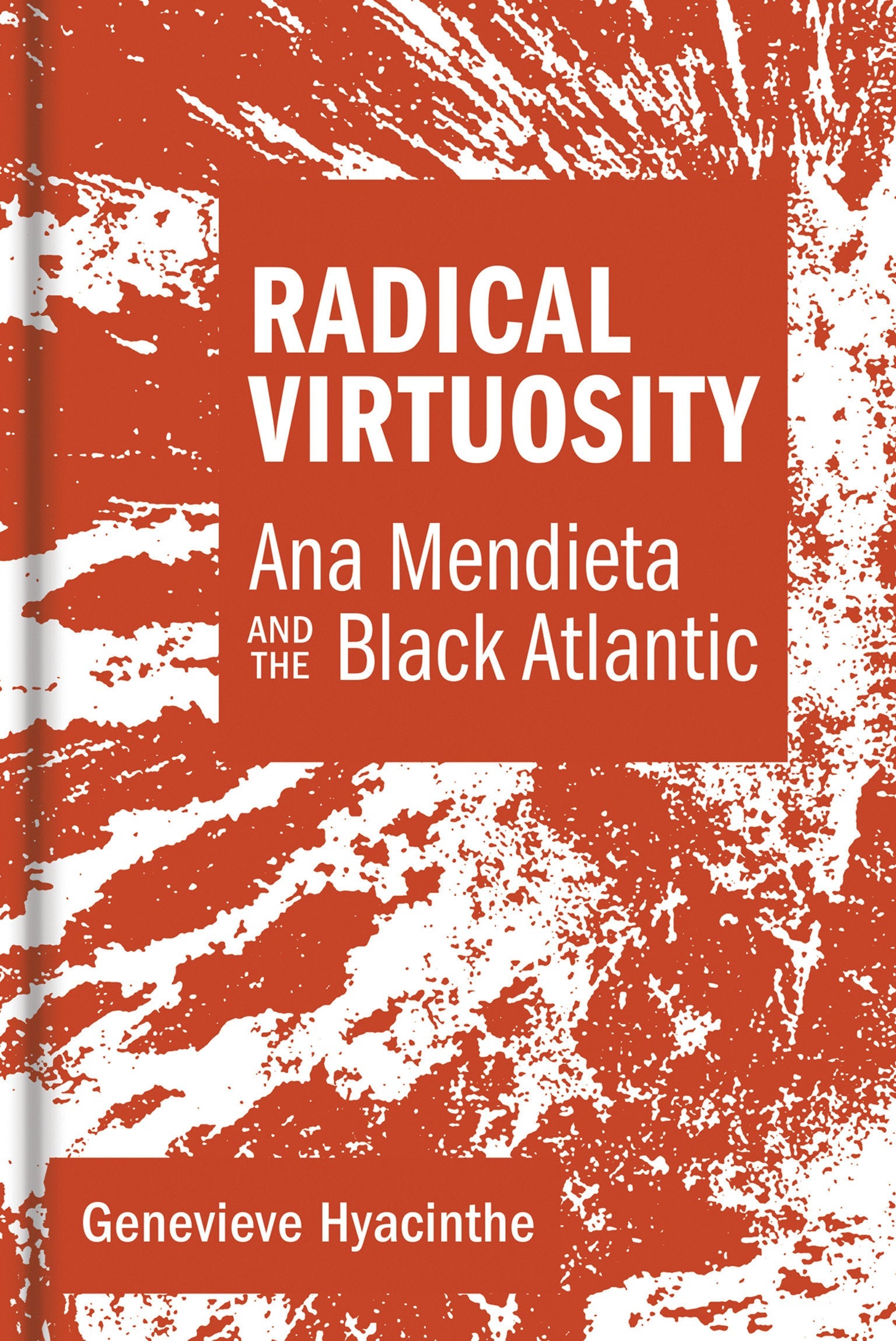

Description
xReclaiming the artist Ana Mendieta as a formally innovative maker of performative art who forged connections to the marginalized around the world.
The artist Ana Mendieta (1948–1985) is remembered as the creator of powerful works expressing a vibrant and unflinching second-wave feminist sensibility. In Radical Virtuosity, art historian Genevieve Hyacinthe offers a new view of Mendieta, connecting her innovative artwork to the art, cultural aesthetics and concerns, feminisms, and sociopolitical messages of the black Atlantic.
Mendieta left Cuba as a preteen, fleeing the Castro regime, and spent years in U.S. foster care. Her sense of exile, Hyacinthe argues, colors her work. Hyacinthe examines the development of Mendieta's performative artworks—particularly the Silueta series (1973–1985), which documented the silhouette of her body in the earth over time (a series “without end,” Mendieta said)—and argues that these works were shaped by Mendieta's appropriation and reimagining of Afro-Cuban ritual. Mendieta's effort to create works that invited audience participation, Hyacinthe says, signals her interest in forging connections with the marginalized, particularly those of the black Atlantic and Global South. Hyacinthe describes the “counter entropy” of Mendieta's small-scale earthworks (contrasting them with more massive works created by Robert Smithson and other male artists); considers the resonance of Mendieta's work with the contemporary practices of black Atlantic female artists including Wangechi Mutu, Renee Green, and Damali Abrams; and connects Mendieta's artistic and political expressions to black Atlantic feminisms of such popular artists as Princess Nokia.
Mendieta's life and work are often overshadowed in popular perception by her early and tragic death—at thirty-six, she plunged from the window of the thirty-fourth floor Greenwich Village apartment she shared with her husband, the artist Carl Andre. (Andre was charged with her murder and acquitted.) Hyacinthe's account—profusely illustrated, with many images in color—reclaims Mendieta's work and legacy for its artistic significance.
- Choosing a selection results in a full page refresh.