Currency
 AED
AED
 AFN
AFN
 ALL
ALL
 AMD
AMD
 ANG
ANG
 AUD
AUD
 AWG
AWG
 AZN
AZN
 BAM
BAM
 BBD
BBD
 BDT
BDT
 BIF
BIF
 BND
BND
 BOB
BOB
 BSD
BSD
 BWP
BWP
 BZD
BZD
 CAD
CAD
 CDF
CDF
 CHF
CHF
 CRC
CRC
 CVE
CVE
 CZK
CZK
 DJF
DJF
 DKK
DKK
 DOP
DOP
 DZD
DZD
 EGP
EGP
 ETB
ETB
 EUR
EUR
 FJD
FJD
 FKP
FKP
 GBP
GBP
 GMD
GMD
 GNF
GNF
 GTQ
GTQ
 GYD
GYD
 HNL
HNL
 HUF
HUF
 IDR
IDR
 ILS
ILS
 INR
INR
 ISK
ISK
 JMD
JMD
 JPY
JPY
 KES
KES
 KGS
KGS
 KHR
KHR
 KMF
KMF
 KRW
KRW
 KYD
KYD
 KZT
KZT
 LAK
LAK
 LBP
LBP
 LKR
LKR
 MAD
MAD
 MDL
MDL
 MKD
MKD
 MMK
MMK
 MNT
MNT
 MUR
MUR
 MVR
MVR
 MWK
MWK
 MYR
MYR
 NGN
NGN
 NIO
NIO
 NPR
NPR
 NZD
NZD
 PEN
PEN
 PGK
PGK
 PHP
PHP
 PKR
PKR
 PLN
PLN
 PYG
PYG
 QAR
QAR
 RON
RON
 RSD
RSD
 RWF
RWF
 SAR
SAR
 SBD
SBD
 SEK
SEK
 SGD
SGD
 SHP
SHP
 SLL
SLL
 STD
STD
 THB
THB
 TJS
TJS
 TOP
TOP
 TTD
TTD
 TZS
TZS
 UAH
UAH
 UGX
UGX
 USD
USD
 UYU
UYU
 UZS
UZS
 VND
VND
 VUV
VUV
 WST
WST
 XAF
XAF
 XCD
XOF
XPF
XCD
XOF
XPF
 YER
YER



Description
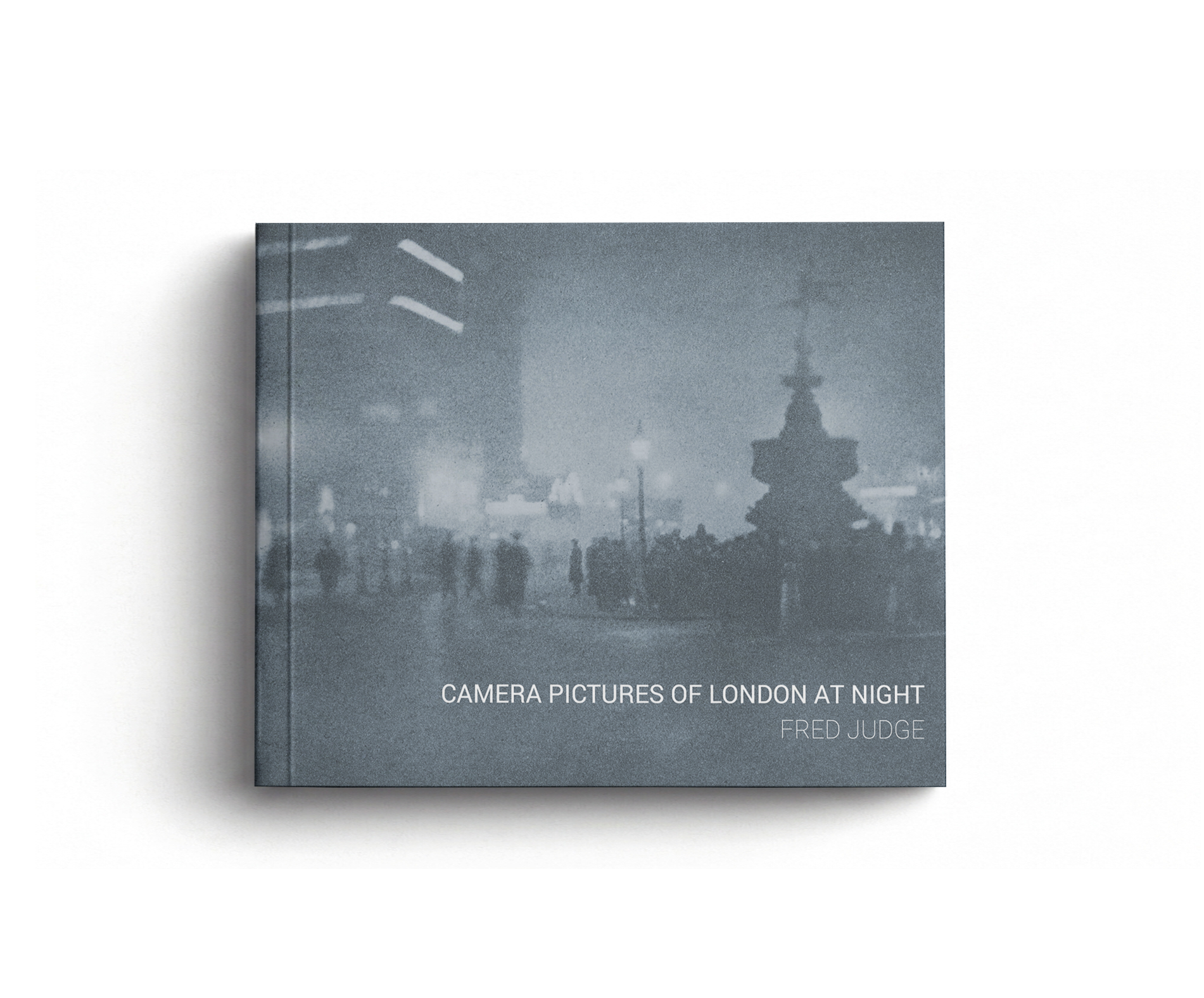
xIn 1924, photographer Fred Judge produced one of the earliest photographic studies of the city of London after dark. His pioneering work was published as Camera Pictures of London at Night at a time when photography was still largely confined to daylight. Due to this book being out of print for decades, Judge’s work has remained largely absent from photobook histories. This new edition restores it to view, offering contemporary audiences the chance to encounter it again.
Judge’s book presents London as a sequence of nocturnal impressions: streets illuminated by gas and electric light, silhouettes dissolving into shadow, and architectural forms emerging from darkness. Locations such as Tottenham Court Road, Leicester Square, and the Waldorf Hotel are rendered not as documentary records but as atmospheres—images structured as much by absence as by presence.
“What goes unseen becomes the defining protagonist of the book, as we are taken on a surface tour of the capital under nightfall.”
— Isaac Blease
At the time of the original publication, the British Journal of Photography noted the subtlety of Judge’s handling of tonal gradation and contrast. Seen today, the work can be understood as a precursor to later and more widely recognised explorations of the modern city at night, including Harold Burdekin’s London Night (1934) and Bill Brandt’s A Night in London (1938). Judge’s achievement lies in his early recognition that the city after dark constituted not simply a technical challenge, but a new visual and emotional territory for photography.
“The camera seems a very feeble instrument… to capture a little, how very little, of the pictorial delights to be found in London at night.”
— Fred Judge, from the book’s foreword
Despite this significance, surviving copies are scarce and typically held in institutional collections or appear only occasionally at auction. This new facsimile edition restores the work to view, with careful attention to the scale, sequencing and tonal qualities of the original photogravures. The facsimile is accompanied by a new introduction by Isaac Blease, Archivist at the Martin Parr Foundation, which situates Judge's work within the broader development of British photography and the evolution of the photobook as a form. The edition forms part of Foxed Editions' commitment to recovering overlooked works that expand and enrich established photographic histories.
Fred Judge (1872–1950) was a photographer, entrepreneur, and founder of Judges Ltd., one of Britain’s most successful postcard publishing companies. To his contemporaries, Judge was widely-known for his commercial work, Camera Pictures of London at Night reveals a more experimental and ambitious dimension of his practice. His photographs anticipate later developments in urban photography while remaining rooted in the pictorial traditions of the early twentieth century.


- Choosing a selection results in a full page refresh.